

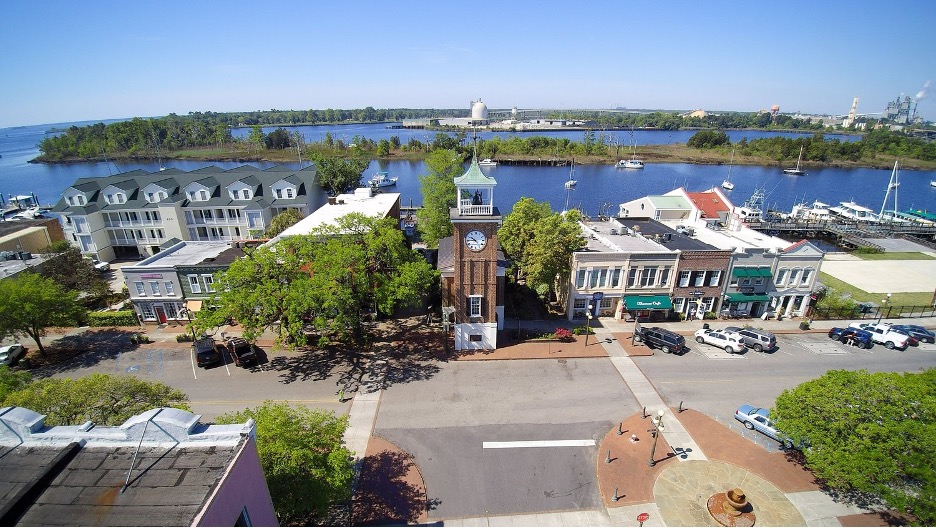
Along the banks of the Sampit River, where the tides of Winyah Bay meet centuries of Southern history, Georgetown stands as one of South Carolina’s most architecturally rich and culturally layered communities. Founded in 1729, it is the state’s third-oldest city, and its streets form an open-air museum of American architectural traditions—from colonial craftsmanship to Victorian elegance to early industrial ingenuity. Walking through Georgetown is like leafing through a living history book, where each building contributes a chapter to the story of a town shaped by resilience, commerce, and community.
At the heart of Georgetown’s architectural identity is its colonial-era legacy, most powerfully represented by Prince George Winyah Episcopal Church. Completed in 1750, the church’s Flemish-bond brickwork and arched windows reflect the practical refinement of early colonial design. Its hand-hewn roof trusses and imported English slate speak to the significance of the port city during the 18th century, when Georgetown played a vital role in the rice and indigo economy. To stand within its churchyard is to feel the quiet dignity of the past in both form and material.
As the town prospered, Georgetown’s architectural palette expanded. Georgian and Federal homes, many built by planters and merchants, line the historic district’s shaded streets. The Kaminski House Museum, dating to the mid-1700s and extensively modified in the 1800s, offers an elegant example of these evolving styles. With its symmetrical façade, gabled roof, and graceful two-tiered piazza, the Kaminski House captures the grandeur of antebellum design while showcasing Lowcountry-specific craftsmanship, including heart-pine timbers and locally made brick.
Victorian influences soon followed, particularly after the Civil War and into the early 20th century. Homes in the Georgetown Historic District feature ornate brackets, bay windows, gingerbread trim, and asymmetrical rooflines—signatures of Queen Anne and Folk Victorian aesthetics. These homes reflect a period of renewal and reinvention, as the town shifted from plantation agriculture to timber, fishing, and maritime trade. Their architectural details are more exuberant than earlier Georgian simplicity, offering a visual reminder of Georgetown’s resilience in rebuilding its civic identity.
Georgetown’s industrial architecture is equally essential to its story. Structures like the old Georgetown Rice Museum building, originally the town’s 1842 Kaminski Hardware Store, reveal the importance of commercial enterprise in shaping the built environment. With its pressed tin ceilings and sturdy brick walls, the building symbolizes how everyday structures—warehouses, shops, and wharves—contribute to a community’s architectural heritage just as much as churches and mansions.
What makes Georgetown especially compelling is the way its architectural eras coexist. The town’s walkable waterfront, framed by historic storefronts, fishing docks, and maritime buildings, forms a cohesive urban fabric that expresses both continuity and adaptation. Preservation efforts, many driven by passionate local advocates, have helped maintain this unique sense of place without freezing it in time.At the South Carolina Architectural Foundation, we see Georgetown as a model of how heritage and design intersect to enrich civic life. Its buildings tell the story of a community shaped by its waterways, traditions, and diverse economic past. Through thoughtful preservation and a shared commitment to honoring the built environment, Georgetown remains not just a historic town, but a vibrant example of how architecture keeps history alive.