

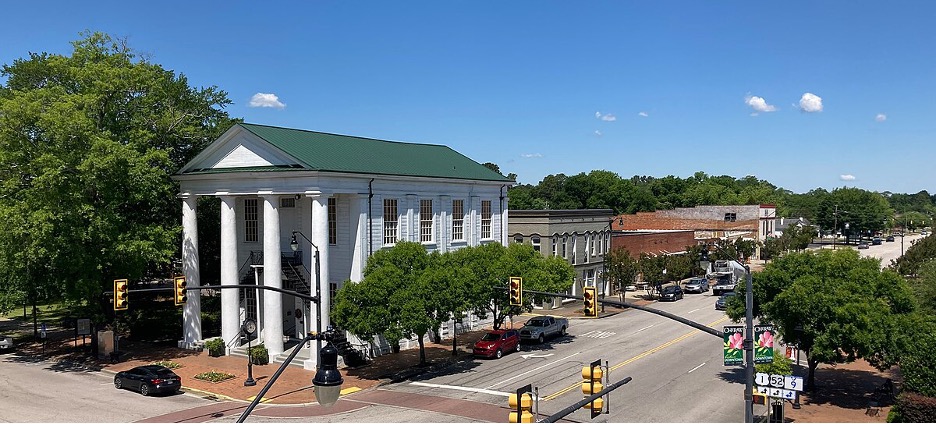
Set along the broad sweep of the Great Pee Dee River, the town of Cheraw offers one of the most enchanting architectural experiences in South Carolina. Founded in the mid-1700s, Cheraw blends colonial practicality with antebellum refinement and Victorian flourish, creating a streetscape that feels both gracefully timeless and distinctly Southern. Its preservation ethos is strong, and walking through Cheraw today feels like stepping inside a thoughtfully curated collection of architectural moments that reveal how design shapes community identity.
One of the earliest and most evocative landmarks in Cheraw is St. David’s Episcopal Church, completed in 1770. As one of the few surviving colonial churches in the state, St. David’s tells a story of resilience and craftsmanship. Its simple brick construction, arched windows, and modest yet dignified proportions reflect the architectural values of a frontier settlement growing into a community. The churchyard—where Revolutionary War soldiers, early settlers, and Confederate veterans rest—adds a contemplative dimension to the site, making architecture a vessel for memory as much as for worship.
Cheraw’s antebellum period brought prosperity, as reflected in stately homes and tree-lined avenues. The Inglis-McIver House, The Dizzy Gillespie Birthplace Site, and a variety of Greek Revival and Federal-style residences capture the elegance of this era. Tall windows, gabled roofs, sweeping porches, and hand-crafted woodwork show the influence of national architectural trends adapted for the Southern climate. These homes stand as reminders that Cheraw was once a bustling river town, where commerce and culture flourished along its busy port.
Victorian architecture plays an equally important role in defining Cheraw’s character. The Cheraw Historic District features a wealth of late-19th-century houses with decorative brackets, gingerbread trim, bay windows, and picturesque asymmetry. These homes reflect a shift in design taste—from the restrained symmetry of earlier periods to the intricate, expressive details of the Victorian era. Cheraw’s iconic tree canopy amplifies their charm: immense live oaks draped in Spanish moss, creating natural “cathedrals” above the streets.
Cheraw’s commercial architecture also reveals its early economic influence. Price’s Drug Store, established in the 1800s and one of the oldest continuously operating pharmacies in the state, showcases original wooden shelving, pressed-tin ceilings, and storefront design indicative of a thriving Main Street. Nearby, brick commercial buildings with tall display windows and decorative cornices still anchor downtown, demonstrating how everyday architecture contributes to a vibrant public realm.
Preservation has long been central to Cheraw’s civic identity. Through community advocacy and thoughtful planning, the town has safeguarded its distinctive sense of place while allowing for contemporary needs. The result is an environment where history feels accessible, and architecture is not frozen in time, but actively woven into daily life.Through Heritage by Design, the South Carolina Architectural Foundation celebrates communities like Cheraw—places where architecture helps tell a deeper story about who we are and where we’ve come from. In Cheraw’s preserved churches, historic homes, and gracious streetscapes, we see how design shapes not only buildings, but the shared spirit of a town.