

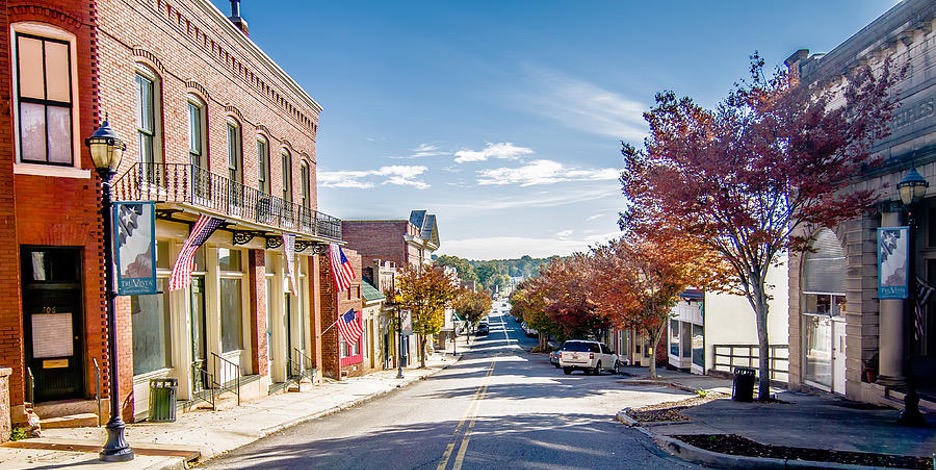
Rising from the rolling Piedmont landscape, the city of Chester stands as a testament to how architecture can reveal the character and aspirations of a community. Founded in the late 18th century and incorporated in 1840, Chester developed around one of the most distinctive courthouse squares in the state—a dramatic hilltop site overlooking the town’s commercial streets, mill neighborhoods, and rail corridor. Today, its historic architecture forms a cohesive portrait of civic purpose, economic evolution, and Southern small-town spirit.
At the heart of Chester’s architectural identity is the Chester County Courthouse, completed in 1852. Designed in the Romanesque Revival style with touches of Greek Revival influence, the courthouse is a commanding presence atop the town’s central hill. Its massive arched entryway, symmetrical façade, tall sash windows, and bold brick-and-stone construction reflect mid-19th-century ideals of justice, permanence, and civic pride. The courthouse lawn, shaded by mature trees and framed by grand stairways, reinforces its role not just as a building, but as the symbolic and physical center of public life.
Surrounding the courthouse, Chester’s historic commercial district paints a vivid picture of 19th-century entrepreneurship. Brick storefronts dating from the 1840s through the early 1900s line the streets below the hill, many with original cornices, cast-iron columns, and tall display windows. These structures—some built by local craftspeople, others by traveling builders—provide insight into how small regional trade centers like Chester supported farmers, merchants, and industrial workers. The rhythm of façades, the narrow lots, and the walkable street grid embody the compact design principles that made Southern towns both functional and sociable.
Chester’s architecture also reflects its evolution from an agrarian crossroads to a textile-era hub. Early mill housing and modest worker cottages tell the story of industrial growth, while larger Victorian and Queen Anne homes reveal the prosperity of merchants and mill owners. Wraparound porches, spindlework trim, asymmetrical gables, and colorful wood siding give these homes a warmth and personality that continue to define Chester’s residential identity.
Religious architecture further enriches the town’s landscape. Churches like Purity Presbyterian Church, originally founded in 1787, and St. Mark’s Episcopal, built in the Gothic Revival style, demonstrate how congregations contributed to Chester’s sense of place. Their steeples, stained-glass windows, and carefully crafted details stand as reminders of the community’s spiritual and cultural foundations.
Chester’s rail heritage also plays a key role in its story. The old Chester Depot, though altered over time, recalls the era when railroads shaped the movement of goods and people throughout the region. Together, these civic, commercial, residential, and industrial structures create a richly layered architectural heritage that captures every chapter of the town’s development.
Today, preservation advocates and local citizens are working to ensure that Chester’s historic fabric remains a vibrant part of its future. Their efforts reflect the values at the core of the Heritage by Design mission: honoring the past not as a static record, but as an active force that shapes identity, community investment, and pride of place.
Chester’s enduring streetscapes stand as a reminder that architecture—especially in small towns—tells stories that matter. In its hilltop courthouse, historic storefronts, and lovingly maintained homes, we see a community built on vision, resilience, and a deep connection to its history.
At the South Carolina Architectural Foundation, we see Chester as a model of how heritage and design intersect to enrich civic life. Its buildings tell the story of a community shaped by its traditions and diverse economic past. Through thoughtful preservation and a shared commitment to honoring the built environment, Chester remains not just a historic town but a vibrant example of how architecture keeps history alive.