
Democracy in Design: The Charleston County Public Library and the Evolution of Civic Architecture
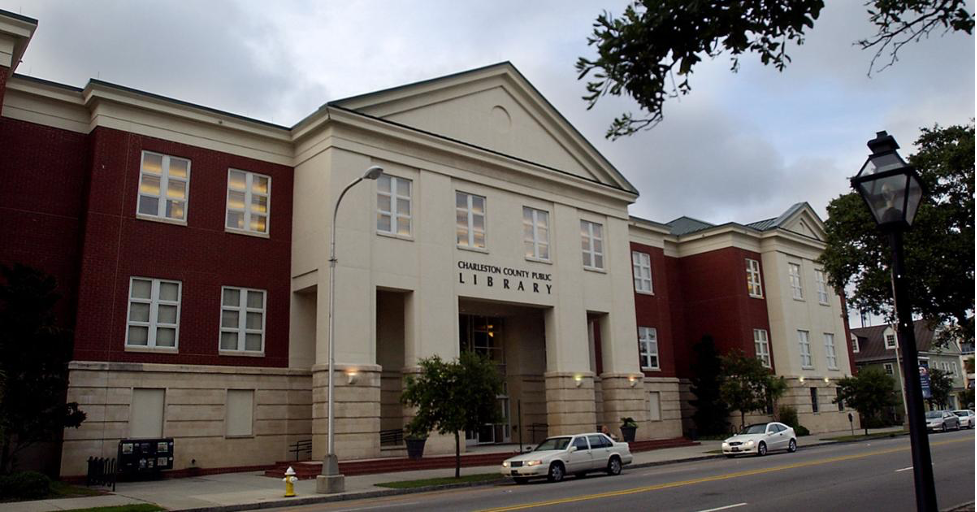
In the heart of downtown Charleston, where King Street’s commercial vitality meets the residential neighborhoods that define the peninsula’s character, stands a building that represents one of the most successful examples of contemporary civic architecture in South Carolina. The Charleston County Public Library Main Branch, completed in 1998 by Robert A.M. Stern Architects, demonstrates how modern institutional design can honor historical context while serving the democratic ideals that public libraries embody.
The story of this library begins with a fundamental question that has challenged architects for generations: How does one design a thoroughly contemporary building in a city where architectural heritage is not merely preserved but actively lived? Charleston’s Historic District, with its carefully maintained 18th and 19th-century streetscapes, presents both inspiration and constraint for contemporary architects. Lesser designers might have retreated into pastiche or, conversely, asserted their modernity through stark contrast. Robert A.M. Stern chose a more nuanced path.
Stern, renowned for his scholarly approach to American architectural traditions, designed the library as what architectural historians call “contextual modernism”—a building that is unmistakably of its time yet respectful of its place. The library’s red brick exterior and carefully proportioned fenestration create a visual dialogue with Charleston’s historic architecture without resorting to literal imitation. The building’s massing, broken into smaller pavilions connected by glass links, reflects the scale and rhythm of the surrounding residential neighborhood while accommodating the large, flexible spaces that contemporary library programming requires.
What makes this project particularly significant is how it redefines the public library as a civic institution for the 21st century. Traditional library design emphasized quiet, compartmentalized spaces focused primarily on book storage and individual study. Stern’s design anticipates the library’s evolution into a community living room—a place where citizens gather not just to read but to learn, collaborate, and engage with their neighbors across lines of age, race, and economic status.
The building’s interior organization reflects this democratic vision through its open, flowing spaces that encourage both focused study and casual encounter. Natural light floods the main reading areas through carefully positioned windows that frame views of Charleston’s historic streetscapes, connecting library users to the broader community beyond the building’s walls. The children’s area, positioned at ground level with its own entrance, signals the library’s commitment to serving all members of the community while protecting the quiet study areas above.
The library’s success extends beyond its architectural merits to its role in Charleston’s ongoing urban development. By choosing to build a major civic institution downtown rather than in a suburban location, the city reinforced the peninsula’s role as the region’s cultural and intellectual center. The library anchors the northern end of King Street’s commercial district while providing a transition between downtown’s commercial core and the residential neighborhoods beyond.
Perhaps most importantly, the Charleston County Public Library represents architecture’s capacity to embody democratic values. In a city with a complex history of social stratification, the library stands as a place where all citizens have equal access to information, technology, and cultural programming. The building’s welcoming design—from its accessible entrances to its comfortable reading areas—reinforces the library’s mission as a truly public institution.
The Charleston County Public Library Main Branch received the 1999 AIA South Carolina Honor Award and continues to serve as a model for contemporary civic architecture.