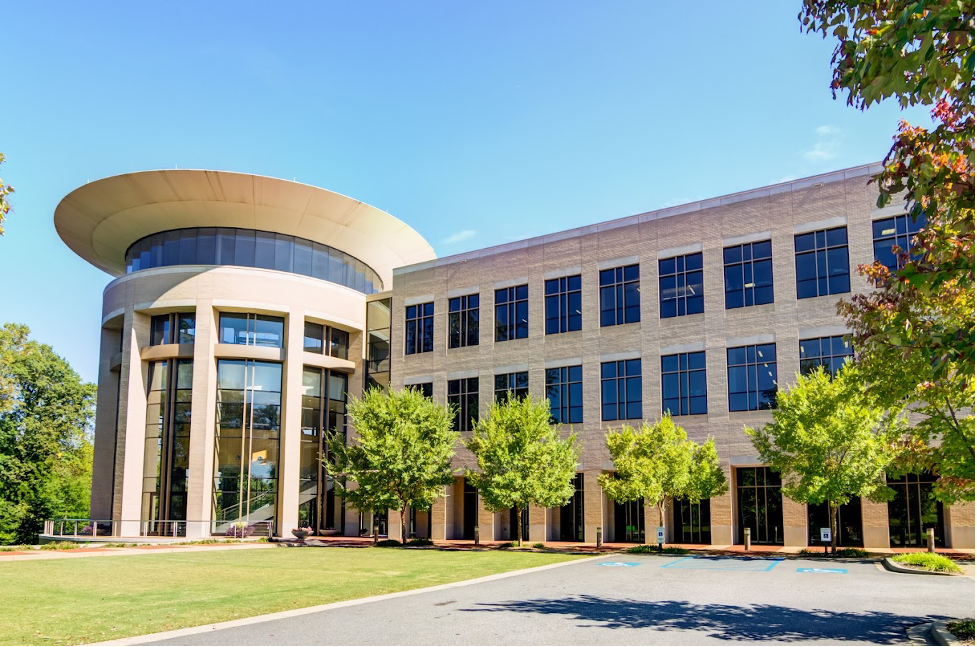

Healing Architecture: The USC School of Medicine Greenville and the Future of Medical Education
In the rapidly evolving landscape of Greenville’s downtown core, where historic textile mills stand alongside gleaming corporate towers, a new building has emerged that represents both the future of medical education and a thoughtful response to the challenges of urban healthcare architecture. The University of South Carolina School of Medicine Greenville, completed in 2012 by Perkins+Will, stands as a testament to how contemporary institutional design can serve both pedagogical innovation and community health while respecting the urban fabric of a transforming Southern city.
The story of this building begins with a fundamental shift in the philosophy of medical education. Gone are the days when medical schools could function as isolated ivory towers, removed from the communities they serve. The USC School of Medicine Greenville was conceived from the outset as an urban medical school—one that would integrate seamlessly with Greenville Health System’s downtown medical campus while creating new connections between medical education, clinical practice, and community engagement.
The six-story, 170,000-square-foot structure demonstrates how medical education facilities can contribute positively to urban streetscapes rather than turning inward like the fortress-like medical complexes of previous generations.
The building’s exterior expression reflects this community-oriented philosophy through its careful use of materials and massing. Red brick—a material that connects the building to Greenville’s industrial heritage—is combined with expansive glass curtain walls that create transparency and visual connection between the interior learning spaces and the city beyond. This transparency is not merely aesthetic, but also pedagogical, reinforcing the school’s commitment to community-engaged medical education, where students learn alongside practicing physicians in real clinical settings.
Inside, the building’s design reflects contemporary understanding of how medical professionals learn best. Traditional lecture halls give way to flexible, technology-rich learning environments that can accommodate everything from small-group problem-based learning sessions to large interdisciplinary conferences. Simulation laboratories enable students to practice procedures in a controlled environment before working with patients. At the same time, clinical skills labs provide spaces for hands-on learning that bridges the gap between theoretical knowledge and practical application.
What makes this project particularly significant in South Carolina’s architectural heritage is its representation of the state’s emergence as a leader in healthcare innovation and medical education. The building serves not just the University of South Carolina but the broader Upstate region, helping to address the critical shortage of physicians in rural and underserved communities throughout the state.
The building’s sustainable design features, including energy-efficient systems and daylighting strategies, demonstrate how institutional architecture can model environmental responsibility while creating healthy learning environments. This commitment to sustainability reflects a growing understanding that buildings designed to heal and educate should themselves embody principles of health and environmental stewardship.
Perhaps most importantly, the USC School of Medicine Greenville exemplifies the role of architecture in democratizing medical education. By locating medical training in the heart of an urban community rather than on an isolated campus, the building makes medical education more accessible and more connected to the diverse populations that future physicians will serve.
The USC School of Medicine Greenville received the 2013 AIA South Carolina Merit Award and has been recognized for its innovative approach to medical education facility design.