

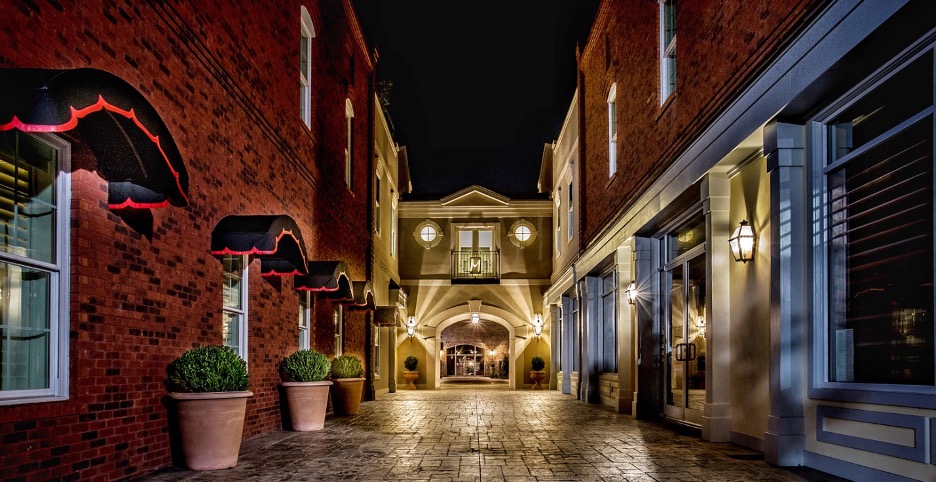
Situated in the Pee Dee region and shaped by its proximity to Black Creek, Hartsville stands as one of South Carolina’s most architecturally compelling smaller cities. The town’s growth from a rural settlement into a dynamic industrial hub in the early 20th century is vividly expressed in its built environment. Hartsville’s architecture tells a story of entrepreneurial vision, community investment, and the powerful role that design plays in transforming place.
Hartsville’s architectural heritage begins with the influence of the Coker family, whose innovations in agriculture and education helped propel the town into regional prominence. Their legacy includes Coker College (now Coker University), founded in 1908, whose early campus buildings reflect the Collegiate Gothic and Classical Revival styles popular in academic architecture of the era. Limestone facades, symmetrical layouts, and arched entries convey institutional dignity while creating a cohesive campus environment that remains central to Hartsville’s identity.
Just steps from the college, the Hartsville Downtown Historic District showcases the town’s commercial vitality during the early 1900s. Two- and three-story brick storefronts with decorative cornices, recessed entries, and original display windows form a cohesive streetscape that feels both historically grounded and pedestrian-friendly. These structures housed merchants, banks, and businesses that served the growing workforce tied to the region’s mills and manufacturing centers. Their enduring form and craftsmanship speak to an era when even utilitarian buildings contributed to civic beauty.
Hartsville’s residential neighborhoods add further dimension to its architectural story. Tree-lined streets feature a rich mix of Craftsman bungalows, Colonial Revival homes, and late Victorian cottages, each expressing different chapters of the town’s growth. Craftsman homes, with their low-slung roofs, generous porches, and exposed rafter tails, reflect early-20th-century ideals of simplicity and handcrafted detail. Colonial Revival houses—with columned porticoes, symmetrical facades, and multi-pane windows—project stability and refinement. These homes reveal how local prosperity translated into an investment in diverse architectural styles that supported family life and community identity.
One of Hartsville’s most distinctive assets is Kalmia Gardens, an early-20th-century estate transformed into a public garden and nature preserve. The gardens’ historic Thomas E. Hart House, built in the 1820s, blends Federal and Greek Revival influences and exemplifies the region’s earliest architectural traditions. The property’s terraced landscape, outbuildings, and garden paths illustrate how natural environment and architectural form work together to shape a sense of place.
Hartsville’s industrial architecture also plays an essential role in its history. Brick mill buildings and warehouse structures constructed during the town’s manufacturing boom provide insight into early industrial design—simple, sturdy, and built for function, yet contributing to the overall visual character of the community. These sites reflect the economic transformations that defined Hartsville’s 20th-century trajectory and continue to shape redevelopment efforts today.
Through preservation efforts, adaptive reuse, and community stewardship, Hartsville has maintained its architectural integrity while embracing new possibilities. The result is a town where history enhances the quality of life, and where the built environment supports both heritage and progress.As part of the Heritage by Design city series, Hartsville reminds us that great architecture is not limited to large cities or monumental landmarks. Instead, it thrives in the everyday buildings, homes, gardens, and civic spaces that reflect the values and aspirations of a community. In Hartsville’s thoughtfully preserved streetscapes, South Carolina’s architectural past continues to inspire its future.