

Winnsboro—A Historic Town Marked by Time, Craft, and Civic Tradition
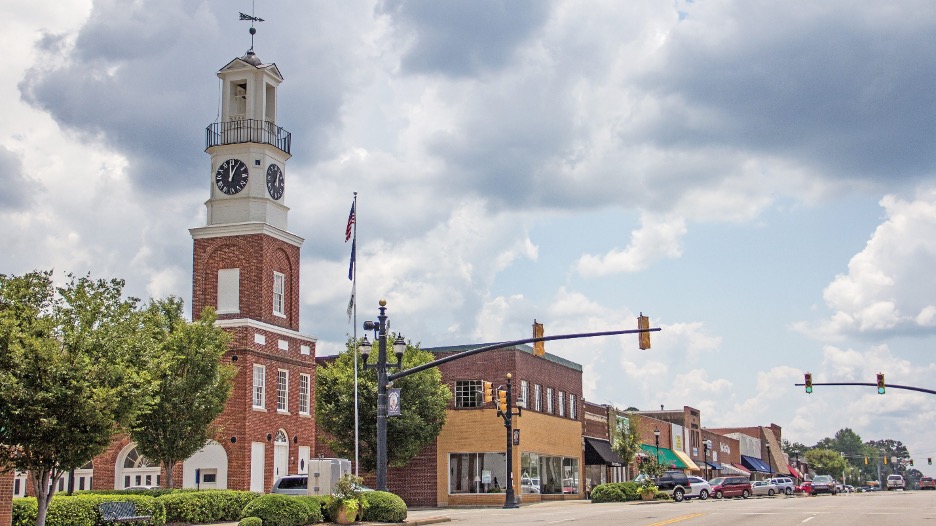
In the heart of Fairfield County, the town of Winnsboro offers one of South Carolina’s most distinctive and enduring collections of historic architecture. Founded in the late 1700s, Winnsboro developed as a key inland crossroads, and its built environment reveals the layered influences of early American settlement, antebellum culture, Victorian civic growth, and early industrial change. Today, its architecture stands as a testament to the community’s commitment to preserving the stories embedded in its streets, homes, and public buildings.
No structure more perfectly symbolizes Winnsboro’s architectural and cultural identity than the Winnsboro Town Clock, installed in 1837 and believed to be the longest continuously running town clock in the United States. Perched atop the 1823 Fairfield County Courthouse—a Federal-style building designed by South Carolina’s own Robert Mills—the clock is both a mechanical and architectural marvel. The courthouse’s brick façade, symmetrical proportions, and refined detailing reflect the emerging American preference for civic buildings rooted in classical ideals. Together, courthouse and clock form one of the most iconic pairings of public architecture in the state, embodying enduring craftsmanship and community pride.
Winnsboro’s historic residential neighborhoods deepen this story with an impressive collection of Federal, Greek Revival, and Victorian homes. Many early residences feature hallmark Federal-period characteristics: side-gabled roofs, delicate fanlights, Flemish-bond brickwork, and restrained ornament. These homes speak to Winnsboro’s early prosperity and the craftsmanship of local builders who blended European influences with regional materials and climate considerations.
As the town grew during the 19th century, a wave of Greek Revival architecture emerged, reflecting national interest in classical antiquity. Columned porticoes, symmetrical façades, and pedimented gables signaled the aspirations of a community confident in its place within the young American republic. Later Victorian homes, often adorned with spindlework trim, wraparound porches, and ornate gables, added expressive flair to the town’s architectural landscape, marking an era of post-war recovery and renewed civic ambition.
Winnsboro also preserves meaningful examples of railroad and industrial architecture, reflecting its role in South Carolina’s transportation history. The Winnsboro Railroad Depot, with its gabled roof and wide overhangs, is a classic example of late-19th-century rail design—functional, sturdy, and central to community life. Nearby warehouses and commercial structures, constructed of brick with arched windows and decorative cornices, illustrate how commerce shaped the town’s development.
Religious architecture further enriches Winnsboro’s historic fabric. First United Methodist Church, First Presbyterian Church, and St. John’s Episcopal each demonstrate distinctive interpretations of Gothic Revival and Romanesque styles, using pointed arches, stained glass, and towered façades to convey spiritual significance and architectural beauty. These sacred spaces have served as centers of community gathering for generations, offering continuity through periods of change.
Preservation efforts in Winnsboro highlight the town’s deep respect for its architectural heritage. The ongoing care of homes, churches, and civic buildings—combined with the extraordinary stewardship of the town clock—reflects a shared belief that history remains essential to community identity and vitality.
As part of the Heritage by Design series, Winnsboro stands as a powerful reminder that architecture tells the story of a place. In its timeless courthouse, historic homes, and rail-era buildings, we see not only the craftsmanship of the past, but the enduring values that continue to shape small-town South Carolina today.