

Conway—A River Town Rooted in Craft, Commerce, and Architectural Continuity
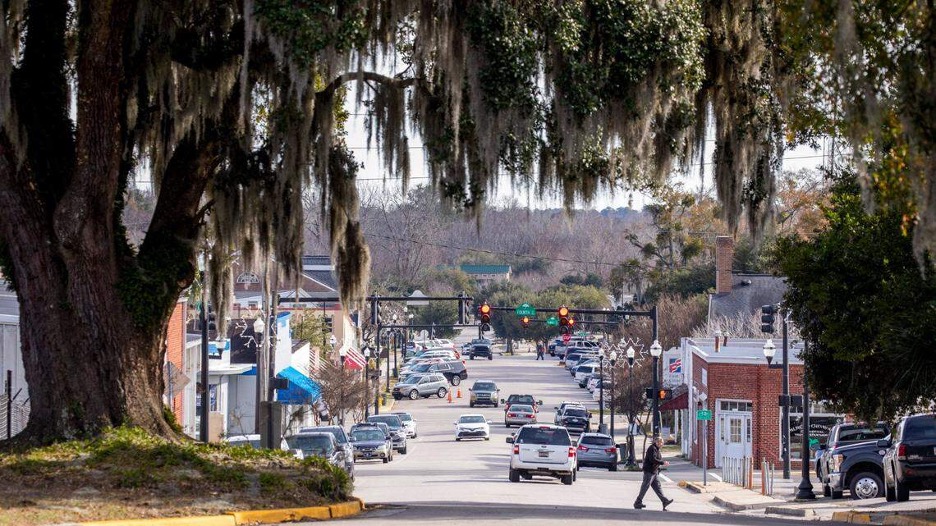
Set along the winding Waccamaw River in the northeastern Lowcountry, Conway stands as a quiet but striking example of how historic architecture can define the character and identity of a community. Founded in the 1730s and later serving as a vital riverport, Conway has preserved much of its historic charm through thoughtful stewardship of its homes, churches, and commercial core. Today, its architecture offers a rare look at how a coastal inland town evolved from colonial outpost to thriving 19th-century center of trade and civic life.
At the heart of Conway’s architectural story is its walkable historic district, a cohesive blend of early 20th-century commercial buildings, preserved residences, and civic landmarks. The district’s defining feature is its canopy of ancient live oaks, many planted in the early 20th century, whose sweeping branches frame the streets in arches of greenery. These trees, coupled with the town’s human-scaled buildings, create an environment where natural and built landscapes work in harmony.
Perhaps the most recognizable structure in Conway is the Horry County Courthouse, completed in 1908. Designed in the Classical Revival style, the courthouse features a grand façade with Ionic columns, symmetrical windows, and a central dome that rises above the surrounding streets. Its imposing presence reflects the region’s aspirations for civic order and architectural dignity during a period of growth and modernization. The courthouse has long served as both a functional center of county life and a symbol of Conway’s status in the region.
Conway’s historic commercial buildings add another layer to its charm. Brick storefronts along Main Street—with their recessed entrances, transom windows, decorative cornices, and arched brickwork—illustrate the town’s prosperity during the early 1900s, when railroads and river commerce supported merchants, mills, and local businesses. Many of these buildings now house restaurants, shops, and galleries, demonstrating how adaptive reuse can enliven a historic downtown while preserving its architectural integrity.
Residential neighborhoods near the river offer an impressive collection of Queen Anne, Colonial Revival, and Craftsman homes, each reflecting different eras of Conway’s development. Queen Anne homes, with their ornate spindlework, asymmetrical façades, and turret-like features, recall the decorative boldness of the late Victorian period. Colonial Revival houses, meanwhile, evoke early American design traditions with their symmetrical layouts, gabled roofs, and classical detailing. Craftsman bungalows, built in the early 20th century, emphasize handcrafted materials, wide porches, and low-pitched roofs—hallmarks of an architectural movement focused on simplicity and harmony with nature.
Religious architecture also plays a significant role in Conway’s historic identity. First United Methodist Church, First Baptist Church, and St. Paul’s Episcopal showcase Gothic and Romanesque influences with pointed arches, stained-glass windows, and soaring steeples. These churches, many dating to the late 1800s and early 1900s, contribute to the architectural continuity that defines Conway’s core.
The Conway Riverwalk, though a modern addition, connects visitors to the town’s historic relationship with the Waccamaw River. The preserved wharves, old pilings, and restored riverfront structures illustrate the importance of waterways in shaping Conway’s early architecture and economy.
Today, Conway stands as a model for how historic preservation and thoughtful urban design can create vibrant, resilient communities. The town’s commitment to maintaining its architectural heritage ensures that residents and visitors alike can experience an authentic sense of place shaped by centuries of history.
Through Heritage by Design, the South Carolina Architectural Foundation celebrates communities like Conway—places where architecture reflects not just the past, but the enduring bonds between people, landscape, and local identity.